
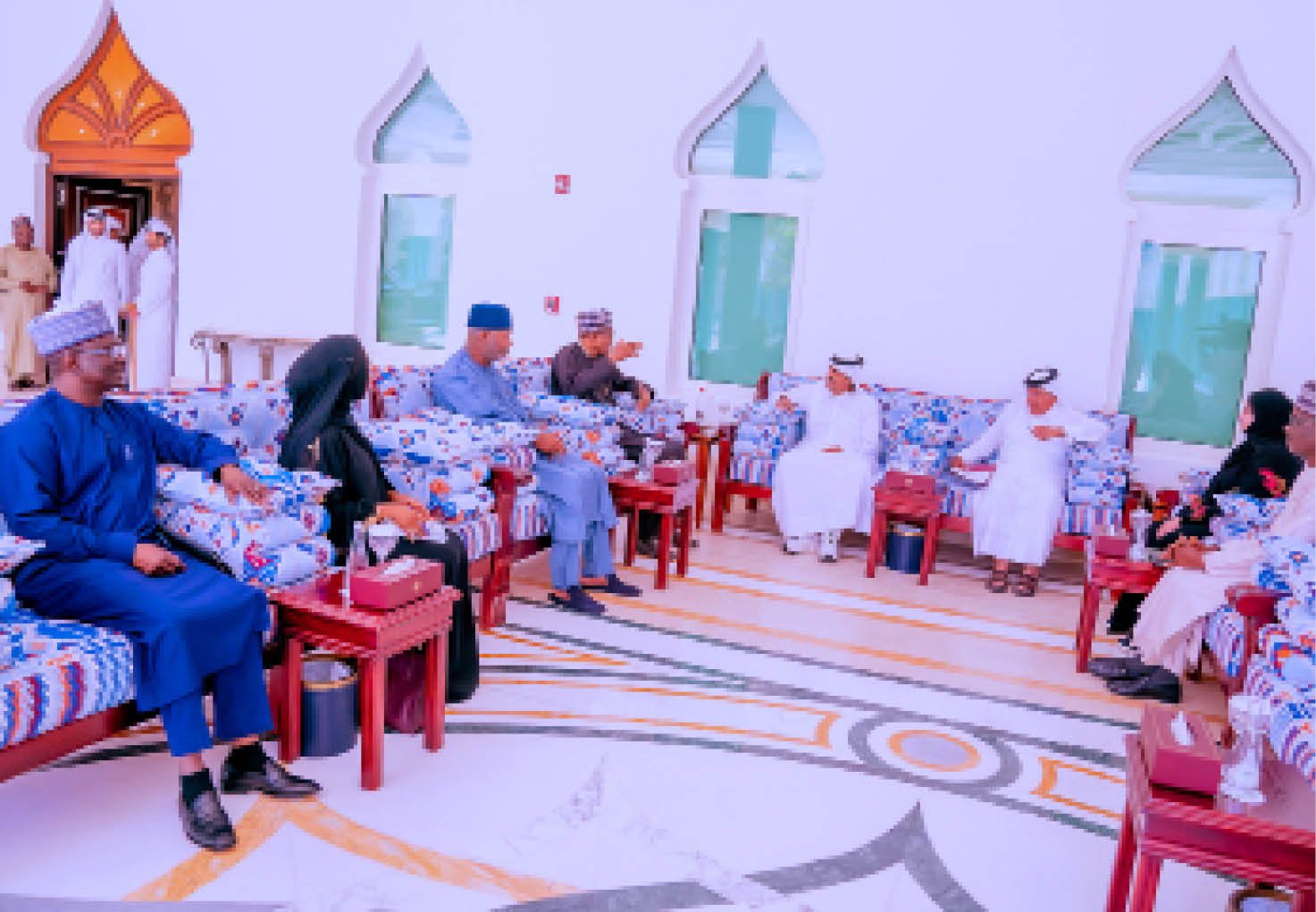
By Egena Sunday Ode
Nigeria is not categorised among the least developed countries, LDCs. So the presence of President Muhammadu Buhari at the just colluded United Nations Conference held in Doha, the splendid capital city of the State of Qatar may have come as a surprise to many. Worse still, the President did not just attend the global event meant to draw the attention of the world, especially the well off countries to the plights of the 46 nations battling for survival, he featured prominently as he delivered one of the acclaimed most thought provoking speeches on Day 2 of the week long conference.
For the avoidance of doubt, the least developed countries (LDCs) are developing countries listed by the United Nations that exhibit the lowest indicators of socioeconomic development. The concept of LDCs originated in the late 1960s and the first group of LDCs was listed by the UN in its resolution 2768 (XXVI) on 18 November 1971.
Three criteria are used to decide whether or not a country is an LDC – a measure for income per capita, a human assets index and an economic and environmental vulnerability index.
Nigeria is ranked as the 31st-largest economy in the world in terms of nominal GDP, the largest in Africa and the 27th-largest in terms of purchasing power parity. -3.0% (2020 est.) 1.5% (2021 est.). The country does not, therefore, fit into the United Nations definition of LDCs as countries that have low levels of income and face severe structural impediments to sustainable development.
But even if Nigeria is not among the least developed countries, it is not yet Uhuru as the country is surrounded, left and right, by poverty stricken neighbouring nations all across the West African Subregion. At the large continental level, Africa is home to about 33 of the 46 LDCs. And coming closer home to the subregion, Niger, Chad, Senegal, Gambia, Liberia, Sierra Leone, Guinea, Guinea Bissau, Benin Republic and Burkina Faso among others are yet to graduate from the damning LDCs status. According to the UN, the LDCs are majorly victims of mindless corruption, political instability and economic dependence. And interestingly, these countries account for about 12 percent of the world population.
With this reality staring it in the face, Nigeria and indeed, President Buhari’s participation in the fifth edition of the once-in-a-decade gathering dubbed as Doha Programmer of Action (LDC5) is the least that should have been expected, especially bearing in mind its gigantic socio political and economic influence in the West African Subregion and the African continent as a whole. Though Presidency Spokesman, Garba Shehu had quickly explained that Buhari’s participation in the multilateral event was at the instance of the Emir of Doha, it has been suggested that to do otherwise would be literally tantamount to watching a neighbour’s house being raised down and not showing any concern; and an abdication of its responsibility as the leading light in the continent.
Shehu had in a statement last Saturday announcing the President’s departure for the event said Buhari’s participation followed an invitation by the Emir of Qatar, His Highness Sheikh Tamim bin Hamad Al Thani.
However, Buhari himself did not keep observers and his audience at the Doha conference guessing on the imperative of his participation.
“Nigeria is here to show solidarity and support to the LDCs in the quest to achieve the Sustainable Development Goals, especially in this decade of action, where no one should be left behind,” he explained.
The conference which took place from 5th to 9th March, 2023 under the theme: “From Potential to Prosperity,” provided an opportunity to garner the support of the international community for accelerating sustainable development in the LDCs as well as assist them make progress towards achieving prosperity. This altruistic solidarity was the gist of President Buhari’s message in his address to the August body, reinforcing Nigeria’s commitment to support the most vulnerable countries to meet their development challenges, highlighting areas through which the Nigerian government has provided them with various forms of assistance over time.
As most of these countries struggle to find sustainable solutions to challenges of poverty, adverse effects of climate change, food and energy crisis as well as high-debt burden among others, the Nigerian President vigorously reiterated the need for sustainable solutions for countries facing these severe challenges.
Buhari’s message at the summit aimed to share developmental ideas was unambiguous: mobilize political will, solidarity, action and solutions to transform the LDCs, by finding sustainable solutions to the challenges of poverty, food insecurity, hunger, weak or non-existent infrastructure, inadequate health facilities, climate change among others as they struggle to deliver on the Sustainable Development Goals (SDGs) by 2030.
For the Nigerian President, the attainment of these goals can be easily accelerated if trade issues and the international financial system as well as the issues of medicare, education, security among others are honestly and holistically addressed.
Accordingly, he charged both the developed and the developing nations to grant duty-free and quota-free market access for products originating from the world’s 46 least-developed countries to ensure their integration in regional and global value chains. This to the Nigerian President should be the starting point the United Nations and indeed the world desire to move away from mere rhetorics and the ritual expression of pity for the LDCs that had characterised similar summits.
The President did not also mince words in strongly criticizing the current structure of the global financial system which places an unsustainable external debt burden on the most vulnerable countries. Accordingly, he warned that such debt burdens would make it extremely difficult for LDCs to meet the 2030 Agenda for Seventeen Sustainable Development Goals (SDGs).
His words: In 2015, the world came together to endorse the 2030 Agenda for Seventeen Sustainable Development Goals. There was no doubt that it was highly ambitious and would require leaders around the world to be fully committed for the SDGs to be achieved within the projected timeframe.
‘‘Eight years on, the possibility of achieving the SDGs remains bleak for many countries, particularly, the Least Developed Countries. The difficulties in achieving the SDGs are numerous and were further compounded by the COVID-19 pandemic, the continued threat of Climate Change, and recently the Russia-Ukraine conflict.
‘‘The Least Developed Countries are often faced with developmental vulnerabilities and challenges that are not always of their making. These pose huge obstacles to their development efforts, hence the need for urgent and robust assistance to help unlock their potentials and build socio-economic resilience.
‘‘This assistance can be provided within the framework of the Doha Programme of Action which is designed to help LDCs exit their current classification,’’ he said.
Further, Buhari challenged the developed countries, civil society actors, the private sector, and the business community, to partner with the LDCs in order to provide necessary resources and capacity to deliver development outcomes in the economic, social, and environmental aspects of the 2030 Agenda.
‘‘As a matter of urgency, there are a number of priorities we have to focus on to help achieve the SDGs in these countries and ensure their prosperity. First, COVID-19 has taught us that we must all work together, to ensure that diseases do not thrive in the LDCs, due to their overall negative impact on productivity and economic growth and development.
‘‘Accordingly, policy and budgetary provisions must be made to ensure equal access to medicare and vaccines, for both the poor and the rich alike. We must also work with manufacturers of medical equipment and pharmaceutical companies to provide adequate equipment, test-kits, vaccines and treatments for diseases.’’ he said.
Buhari also expressed worries over the issue of rising debt burden, underscoring the need for reforms of the international financial architecture that prioritizes the need of least developed countries.
He shared the position of the United Nations Secretary-General, Antonio Guterres who had earlier described the global financial system as an “unfair debt architecture that not only charges poor countries much more money to borrow on the market than advanced economies, but downgrades them when they even think of restructuring their debt or applying for debt relief.”
Buhari’s view point on trade issues canvased at the summit was that it is important to put in place modalities to facilitate transit cooperation, transfer of technologies, and access to global e-commerce platforms, as they are critical for the integration of LDCs into the regional and global value chains and communications technology services.
He stressed that “the adoption of a global coordination mechanism to systematically monitor illicit financial flows and engender support for a United Nations International convention on tax matters to eliminate base erosion and profit shifting, tax evasion, capital gains tax and other tax abuses is essential to achieving the SDGs and promoting security and economic prosperity.”
Buhari also spoke on the devastating effects of climate change on LDCs, saying that they continue to suffer disproportionately despite contributing least to its causes. Accordingly, he advised that countries must prioritize cutting global emissions and work with determination to hold warming to 1.5 degrees, thereby securing the children’s future.
‘‘We must also commit to helping build resilience in developing countries, while also providing the needed technical as well as financial support for a just transition to renewable energy,’’ he said.
He also warned that climate change remains one of the biggest existential threats facing humanity today, posing challenges to lives and livelihoods, and manifesting in different negative forms, including increase in temperature, rise in sea levels, flooding, drought, and desertification.
‘‘It has also led to significant loss of biodiversity. Worst still, climate change has exacerbated conflicts and led to unplanned migration, causing untold hardship in places like the Lake Chad Basin region.
‘‘The Least Developed Countries therefore continue to suffer disproportionately from the effects of climate change, despite contributing the least to its causes. Deaths from climate related crises are higher in the most vulnerable countries, with projections that there will continue to be an upward trend.
‘‘We must continue to focus on how best to ensure the provision of security, education, health and other basic services to our people, in order to guarantee a prosperous future for all,’’ he said.
President Buhari said Nigeria hoped that the Doha Programme of Action would lead to the acceleration of exports from LDCs by 2031, through the facilitation of their access to foreign markets in line with World Trade Organization Facilitation Agreement.