
By Abubakar Yunusa
The Federal Government has begun moves to renew its cooperation agreement with humanitarian organisation, Médecins Sans Frontières, also known as Doctors Without Borders, to sustain critical medical and humanitarian services across Nigeria.
The development followed a high-level meeting between officials of the Federal Ministry of Budget and Economic Planning and the leadership of MSF Nigeria aimed at strengthening collaboration and ensuring uninterrupted humanitarian operations.
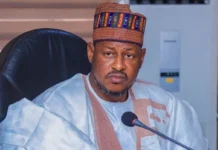
Minister of Budget and Economic Planning, Abubakar Bagudu, reaffirmed the Federal Government’s commitment to supporting humanitarian partners working in difficult environments across the country.
Bagudu, however, acknowledged several challenges affecting healthcare delivery in parts of Nigeria.
He listed the problems to include limited infrastructure in many local government areas, weak laboratory capacity caused by electricity shortages and equipment gaps, as well as inadequate ambulance and emergency services.
The minister also pointed to uneven health system performance across wards and regions, persistent development gaps—particularly in northern states—and community perceptions that sometimes hinder participation in health programmes.
According to him, the government is working to improve coordination, accountability and long-term development planning to address the gaps.
Bagudu added that efforts were also ongoing to strengthen health systems, expand economic opportunities, support agriculture and develop sustainable local structures that would reduce reliance on external aid.
Speaking during the meeting, MSF Country Director in Nigeria, Pitchou Kayembe, expressed appreciation for the partnership with the Nigerian government.
Kayembe reaffirmed the organisation’s commitment to sustaining life-saving humanitarian services across its areas of operation.
He said MSF would continue to support field teams operating in difficult conditions while maintaining active collaboration with government authorities on operational and policy matters.
Kayembe added that the organisation remained committed to strict procedures, fair processes and improved programme delivery.
Also speaking, the Permanent Secretary of the ministry, Deborah Odoh, commended MSF for its consistent humanitarian interventions, particularly in remote communities in northern Nigeria.
Odoh recalled her previous professional engagement with the organisation and assured that the ministry would continue to support its operations in the country.
The meeting ended with both parties agreeing on the urgency of renewing the cooperation agreement to prevent disruption of essential humanitarian services.
MSF has been operating in Nigeria since 1996 and currently runs healthcare projects in 11 states, including Zamfara, Sokoto, Kebbi, Borno, Ebonyi and Cross River.
The organisation supports general hospitals in Shinkafi and Zurmi in Zamfara State and also runs a mobile emergency response team to reach vulnerable communities.