

By Femi Oyelola
Minister of Humanitarian Affairs and Poverty Alleviation, Dr. Betta Edu, recently confirmed that on Monday night, August 28, 2023 the Cameroonian authorities released water from the Lagdo Dam.
She also disclosed that Nigerians will begin to feel the impact of the opened dams in the next seven days.
The interpretation of this is that the country should brace up for another day or weeks of flooding that will threaten lives and property.
Since the construction of the Lagdo Dam, located in northern Cameroon which started in 1977 and completed in 1982, the Cameroonian authorities have been opening the dam to reduce the level of water caused by the persistent rains in the country.
This action by the Cameroonian authorities usually led to many Nigerian communities along the coast of the River Niger and River Benue to be affected by the flooding.
The floods alert by the National Emergency Management Agency, (NEMA), stated that nine Nigerian states, namely; Adamawa, Taraba, Benue, Nasarawa, Kogi, Anambra, Edo, Delta Kaduna, and Bayelsa may witness major flooding.
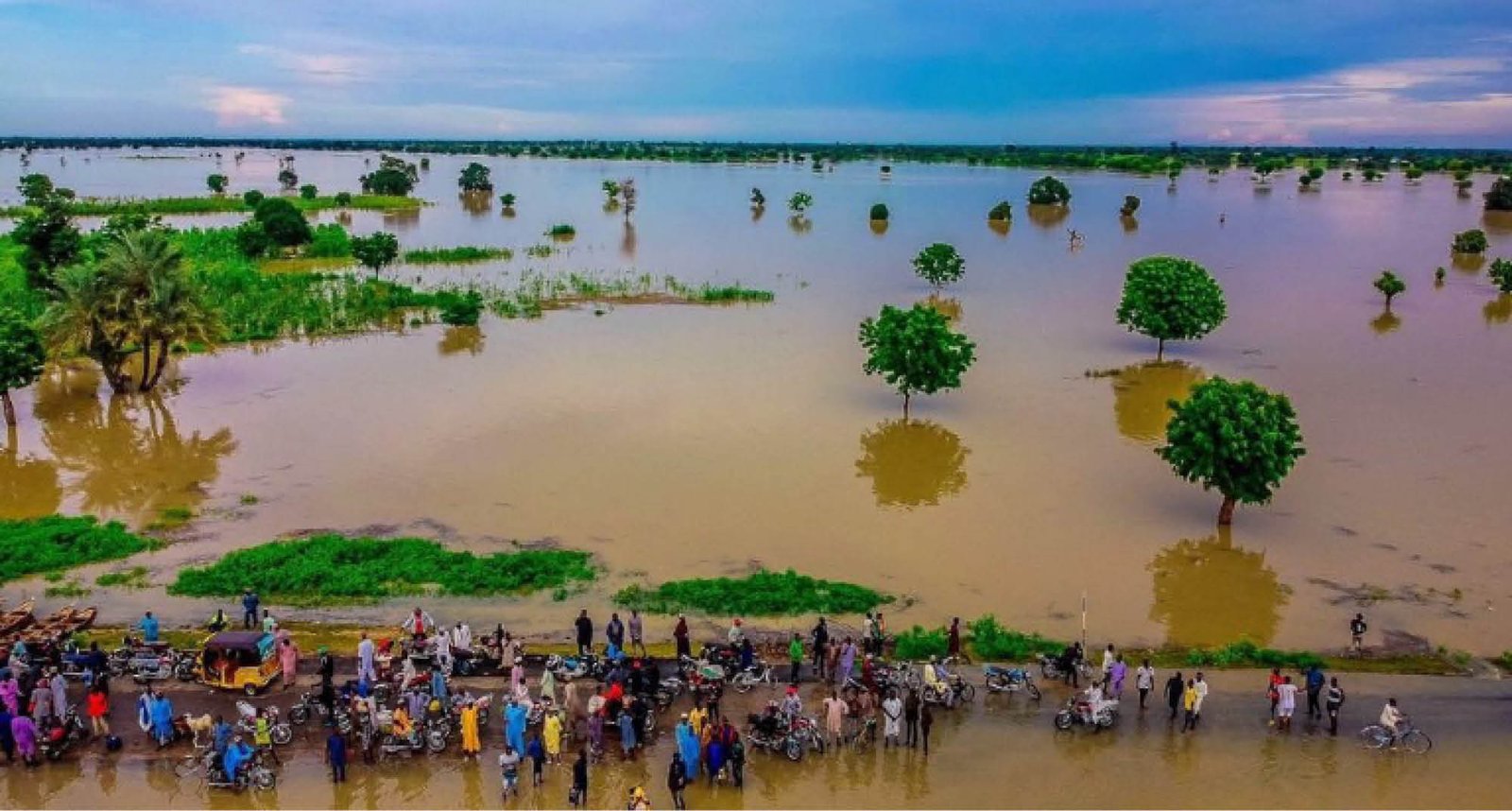
This is a piece of sad news for the communities that will be affected by the flood because some of them have not come out of the pains of the 2022 devastation caused by the opening of the Lagdo Dam.
A report by NEMA revealed that at least, flooding killed more than 300 persons, injured 500 persons, and displaced 100,000 others in 2022, and here we are in 2023 ready to witness a similar scenario.
This has prompted well-meaning Nigerians to call on the Federal Government, (FG), to find a lasting solution to the Lagdo Dam disaster that is looming.
Mr. Yusuf Goje of the Kaduna State, Local Government Accountability Mechanisms, (KADLGAM), who expressed dismay over the looming flood said, this is one of the sad things about Nigeria, where it does not proactively prepare to prevent a disaster until it is looming then it start to take reactive steps.
Goje opined that there is no way the concerned authorities would say they had not been forewarned that water levels would reach the extent that Cameroon would open its dam.
He also observed that before now, adequate funding should have been released to relevant authorities to commence dredging of affected water channels, early sensitization, and prepare for emergency resettlement temporary camps of likely affected communities.
“Sadly, the government will wait till the disaster happens, only then will NEMA, which is poorly funded, will be deployed to manage a situation beyond its capacity.
“Much worse, can you imagine that victims of the 2022 floods are yet to be compensated? It is only recently that NEC informed the nation that some States are yet to submit their 2022 flood reports.
“Going forward, to minimize the negative impact of the impending flood, the existing multi-sectoral and stakeholder coordination mechanism should be strengthened and funding released on time.
“Resources should be deployed for dredging of waterways, and massive sensitization and modalities for mass evacuation should be put in place to relocate affected communities,” he observed.
Similarly, Mallam Ibrahim Modibo, a resident of Yola, Adamawa state capital, said the Lagdo Dam disaster would have been a thing of the past if the Nigerian government had completed the Dasin Hausa dam project sited in Dasin Village of Fufore Local Government Area of the state.
The dam, according to him was supposed to be two and half the size of the Lagdo Dam and, was supposed to generate 300 megawatts of electricity and irrigate about 150,000 hectares of land in Adamawa, Taraba, and Benue states.
But sadly, since 1982, the Nigerian government has yet to complete the Dasin Hausa dam. As a result, any time the Cameroonian government releases excess water from its Lagdo dam, communities in Kogi, Benue, and northeastern states get flooded.
Going down history lane at inception, Cameroon and Nigeria had an agreement to build two dams such that when water is released from the Cameroonian dam, the Nigerian dam would contain it and prevent it from causing floods.
Meanwhile, years after it failed to build a dam to address the perennial flooding issue in states and communities along the River Benue, the Federal Government of Nigeria has made futile moves to forestall the recurrence of the devastating floods.
In 2013, Nigeria sent a high-powered delegation to Yaounde, Cameroon’s capital to deliberate with the country’s authorities and to demand a commitment from them on how to address the periodic flooding in Nigeria caused by the Lagdo dam.
At the meeting, Nigeria and Cameroon signed a memorandum of understanding, (MoU), which entailed information sharing between the two countries about rainfall and how to manage the release of excess water without leading to flooding disasters.
It was also agreed that before Cameroon opens its dam, it must issue an early warning to enable Nigeria to put proactive measures in place to prevent the destruction of lives and property.
This implies that with the MoU, the Central African country, usually deem it necessary to inform the Nigerian authorities about its intention to release excess water from the Lagdo dam. This arrangement, however, has failed to sufficiently address the flooding issue in Nigeria.
Giving credence to this, the spokesperson of NEMA, Manzo Ezekiel, explained that the 2022 flooding is the highest Nigeria has ever had since 2012 and experts report from The Nigerian Meteorological Agency, (NIMET), are at the views that the 2023 flood will be worse.
Patron of the Nigerian Institution of Surveying and Geoinformatics Students, Kaduna chapter, Surveyor Musa Ephraim, expressed dismay that despite the loss of lives and property, the Nigerian government seems to be foot-dragging in finding lasting solutions to perennial flooding in the country.
According to him, the 2022 flood in Kogi displaced thousands of residents in the Ibaji Local Government Area of the state. The area was completely submerged for days.
He added that about six persons reportedly lost their lives, including a toddler and over 600 hectares of rice farmlands among several buildings were destroyed.
He also said that in the same 2022 3,274 people in Benue state were reportedly affected, while about 1,213 houses were reported to have been destroyed.
Similarly, in Jigawa, a total of 92 people died from flooding, while 651,053 persons in six local government areas were displaced by floods.
But in assuring words, Dr. Betta Edu, said President Bola Tinubu has directed after the first Federal Executive Council meeting for proper coordination.
The Minister said her ministry with others will be working with the office of the Vice President and the Nigeria Governors Forum to ensure proper mitigation of the likely impact of the impending floods.
She urged State Governments and communities that may be affected by the flood to begin immediate evacuation of their family members and livestock to plain areas.
She also hinted that the Federal Government will provide temporary shelter and other relief items to those who may be affected.
“We are gathered on the instance of the President following a presentation which I made at the FEC today on the opening of the Cameroon Lagdo dam, which has already been opened as we speak and it is expected that within the next seven days, we will begin to see the effect on that dam opening in Nigeria.
“Flood is gradually becoming a yearly or seasonal occurrence in Nigeria, which has led to loss of lives and property in large numbers.
“We as a government are always interested in preventing, mitigating, and proffering solutions including recovery plans for flood and its consequences.
“Presently, we have a direct task of Mr. President to ensure properly prepared for the consequences of the dam, which has been opened in Cameroon and that is why this coordination meeting is being held tonight to help Nigeria adequately respond to it.
“A couple of States have been implicated and there have been ongoing engagements by NEMA with the state governments, but this will be carried out at a higher level between the ministers, probably the Vice President and the state governments; members of the Nigeria governor’s forum to ensure that they are part of the preparedness,” the Minister said.
On what is expected of states and communities that may be affected, Dr. Edu said: “One of the things the states and communities should do and even individuals is to begin to ensure that drainages are cleared and cleaned and whatever construction we have done on the drainages are quickly removed.
“Sensitization must also begin from the federal to the states, local governments, and communities. Everyone must be part of this engagement and sensitization.
“Persons and areas that will be affected by the flood must at this point begin to move to higher plains where their lives are protected. If they have livestock to move, they need to do that as soon as possible.”
For the state governments, she said: “State governments must stand up to the responsibilities and task of involuntary evacuation of persons that will be affected by the flood. It is thinkable to lose property, but it is unthinkable and unacceptable to lose lives and that is what we want to avoid.
“Other measures would be put in place by the governments at all levels to ensure that we can prevent, mitigate, and recover from whatever the consequences of this dam opening.”
On the humanitarian aspect and what the ministry intends to do, the minister said: “We know these situations push people down the poverty line. We will be working with other ministries and governments to ensure that humanitarian services including provision of food and other items that will be necessary are provided.
“Shelters, we are going to work with governments to provide temporary shelter for those that will be affected. We will offer support in terms of health, livelihood for recovery for those people that are moving.
“We are assuring Nigerians that we will do everything possible with the support of the President to ensure that we take necessary steps to control this menace.
“We call on Nigerians in the danger zones to vacate and state governments should come in to ensure that such people living in danger areas are evacuated immediately,” she directed.
Be that as it may be, Nigerians with one voice are calling on the Federal Government to be more proactive in finding more effective and long-lasting solutions to the yearly flood disaster in Nigeria occasioned by the Lagdo Dam.
Never miss a moment! Get the stories shaping Nigeria, delivered straight to your phone. Follow Peoplesdaily Newspaper on WhatsApp for breaking news, exclusive reports, and the headlines everyone will be talking about, before anyone else.


