
By Tobias Lengnan Dapam
Before now, the number of zero dose vaccination in Yobe state was high, forcing experts and stakeholders to jaw-jaw on how best to improve the situation.
At the forefront of changing the narratives, United Nations Children’s Fund (UNICEF), embarked on a wide range community advocacy, engaging traditional leaders, religious leaders and other relevant stakeholders in various communities in the state.
After intensive campaign, Yobe state government confirmed an improvement, saying over 26,000 have been successfully vaccinated across the state.
Some of the beneficiaries said the campaign changed the lives of so many children in their communities.
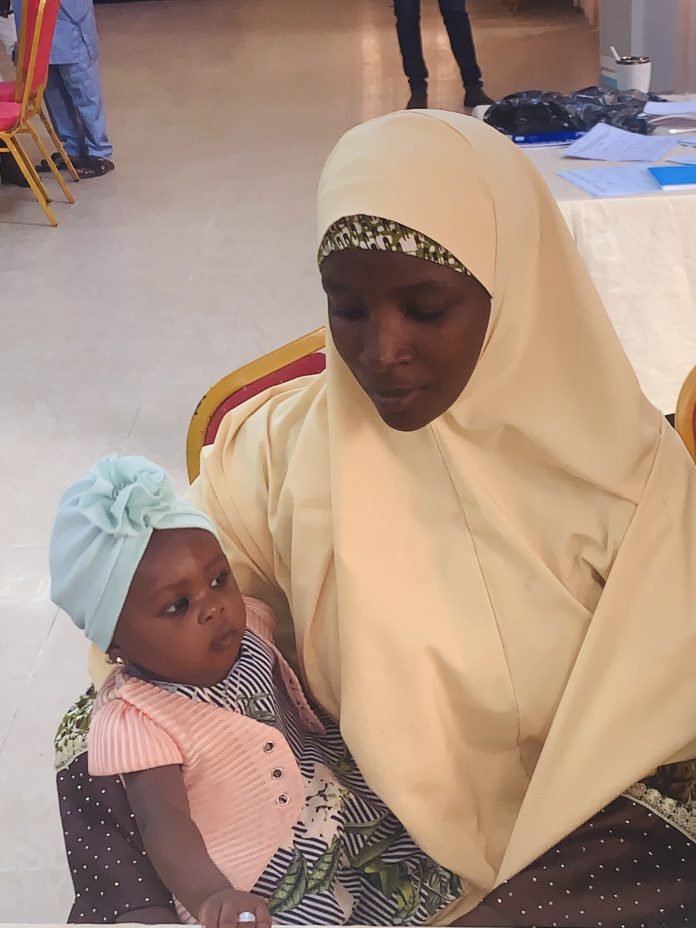
Speaking to our reporter during a media dialogue in Yobe, 30 years old Hafsat Yau, from Pawari Bindigari, Pawari Ward, said she benefited a lot from the enlightenment campaign of UNICEF officials about vaccination for children.
“Initially, we were resisting it because we didn’t know its importance, but when the officials intensified the campaign, our religious and community leaders gave us more insight about vaccination and its benefits.
“They taught us the importance of exclusive breast feeding, polio and measles vaccination for children. It is this campaign that has helped us to understand the importance of vaccination”.
Also speaking, 35 years old Nana Muazu, who is a mother of four children from
Pampamari Farin Masallaci, Gwange Ward, said she is happy with the results of vaccination and exclusive breast beefing.
“We were not doing it before because nobody taught us, and we didn’t see our parents doing it. But with the knowledge that we have received, we are now teaching other women in the community.
“When I compare my children that enjoyed exclusive and those who did not enjoy exclusive breastfeeding, there is a Hugh difference. I am happy that I can comfortably share my story with other people to learn from my experience.”
Confirming this, the Yobe State Commissioner for Health, Dr. Mohammed Lawan Gana, said over 26,000 have been successfully vaccinated across the state.
The commissioner explained that the state is working towards “intensifying efforts to reach every eligible child, especially in underserved, hard-to-reach, and security-challenged areas,.”
He stated that the state is leaving no stone unturned to reach every eligible child, particularly in underserved, hard-to-reach, and security-challenged areas.
Gana added that their mission is to strengthen community immunity and integrate health systems for long-term impact.
The commissioner noted that in Gujba and Gulani local government areas alone, more than 10,000 zero-dose children have been enrolled in health insurance schemes to ensure sustained healthcare access beyond vaccinations.
“This isn’t just about vaccines; it’s about building resilient health systems,” he added.
The commissioner cited insecurity, poverty, low literacy, and poor health-seeking behavior as major hurdles. To combat these, Yobe has partnered with traditional and religious leaders, held town hall meetings, and launched community engagement drives.
“In areas where hesitancy stemmed from infrastructure deficits, the state drilled boreholes and constructed roads to build public trust. “
Speaking on the need for vaccination, Bashir Elegbede,UNICEF Health Officer, said Nigeria bears the highest global burden of zero dose children with an estimated 2.1 million children living without any routine vaccination.
He said for the country to meet global targets, it must reduce the number of zero-dose children by 25 percent by 2025 and 50 percent by 2030.
Elegbede explained that reducing the number of zero-dose children is crucial for improving public health outcomes in Nigeria.
“Vaccines are lifesavers. They provide the necessary foundation for children to thrive. Across the world, millions of lives have been saved by vaccines. Globally, sadly, Nigeria has the highest burden of zero dose children.
” A number estimated to be 2.1 million as at 2023 (WUENIC 2023). With Borno and Yobe states having a disproportionate number of these children.
” UNICEF, alongside stakeholders in the health sector have continued to work with government to reduce the number of zero dose children through improvement routine immunization coverages and approaches that strengthen the health systems across Nigeria.
“A global target is to reduce number of children that are zero-dose by 25% by 2025 and by 50% by 2030,”he said.
According to him, implications for children who are not immunized “have been seen to have a relatively high risk of being infected and succumbing to VPDs like polio, measles, CSM, yellow fever, and viral hepatitis amongst so many diseases numbering up to 30.”
He said UNICEF has supported Yobe State in vaccinating around 20,000 zero dose children with the administration of the DPT/PENTA vaccine in 2024, adding that in Borno State, UNICEF’s intervention has successfully reached 145,000 zero dose children across prioritized local government areas.
“We should take advantage to safeguard precious lives of our children and country men and women.Vaccines ensure less disease and more life.
“A vaccine for one among us is for our collective protection.Not everyone has the same access to life-saving vaccines. However, Nigerian government and partners are striving to address these inequities. Vaccination for all is humanly possible,”he added.
Yobe’s traditional rulers have played a pivotal role, mobilizing communities through advocacy, public vaccinations, and dispelling myths.
The Emir of Fika, Alhaji Mohammadu Abali, dismissed rumors of harmful vaccinations as “mischievous”, urging parents to cooperate.
The emir’s intervention helped reopen schools after a three-week closure sparked by vaccine misinformation.