
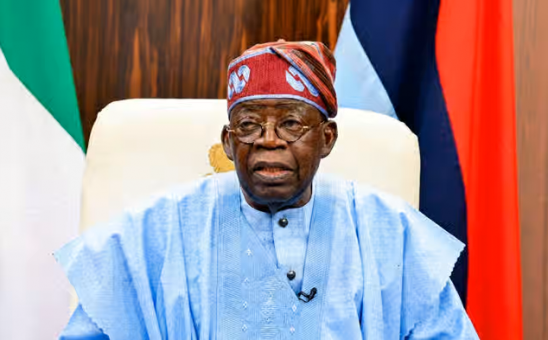
President Bola Ahmed Tinubu has pledged to review tariffs on newspaper and broadcasting materials as part of efforts to strengthen Nigeria’s media industry and enable it to effectively carry out its constitutional responsibilities.
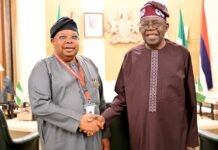
The President made the commitment on Friday at the State House in Abuja while hosting leaders of the Nigerian media, including representatives of the Nigeria Press Organisation (NPO), the Newspaper Proprietors Association of Nigeria (NPAN), the Broadcasting Organisation of Nigeria (BON), the Nigeria Guild of Editors (NGE), and the Nigeria Union of Journalists (NUJ).
Tinubu commended media owners, editors, and journalists for their role in informing and educating citizens, keeping the public updated on national developments, and providing employment opportunities for thousands of Nigerians.
The President emphasized that responsible leadership requires making difficult but timely decisions, noting that his administration had taken tough measures to stabilise the nation’s economy and avert financial collapse.
“Leadership must, as a matter of responsibility, make decisions at the best time. Yes, I accepted my predecessor’s assets and liabilities because I applied for the job and was given the job. So I have to do it,” Tinubu said.
“But if anybody tells you it’s easy, it’s a lie. I thank you for your criticism at the beginning of the administration. You challenged me. Thank you for inspiring and challenging me at a critical moment in my life,” he added.
He explained that the administration had taken decisive steps to rescue the economy from serious fiscal challenges, including rising inflation and foreign exchange instability.
“Having asked for the job and got it, I can’t look back other than to make corrections as I move along. We had to save the nation and bring it back from the brink,” he said.
“Today, I can stand proudly before you and say that we are back from the brink.”
Responding to concerns raised by media executives over tariffs on media materials and equipment, Tinubu assured them that the issue would receive attention.
“We discussed issues of tariffs this afternoon. What I cannot report back here is whether I took action in the areas that affect you. But if I missed that, I will go back to rectifying whatever was necessary,” he said.
The President also called on the media to continue to hold governments at all levels accountable, stressing that recent federal reforms have increased financial allocations to states and local governments.
Minister of Information and National Orientation, Mohammed Idris, expressed confidence in Tinubu’s leadership, describing the President as resilient and visionary. He urged journalists to continue to perform their constitutional role responsibly while ensuring accountability in governance.
Aremo Olusegun Osoba, Grand Patron of the Newspaper Proprietors Association of Nigeria, commended the administration for implementing bold economic reforms aimed at strengthening the country’s revenue generation.
Osoba highlighted the establishment of the Nigeria Revenue Service and the introduction of the National Single Window policy as initiatives capable of boosting the nation’s revenue base.
He also praised Tinubu for urging state governors to ensure that funds received through federal allocations are effectively used to improve the lives of citizens at the grassroots.
Speaking on behalf of the Nigeria Press Organisation, its President and publisher of BusinessDay newspaper, Frank Aigbogun, applauded the President for maintaining a cordial relationship with the media.
Aigbogun, however, appealed to the Federal Government to intervene in reducing import tariffs on newsprint and broadcast equipment, which he said were placing significant financial pressure on media organisations.
He also urged the government to help protect the jobs of Nigerian journalists by addressing the growing challenge posed by global technology companies that utilise editorial content produced by Nigerian media organisations without adequate compensation.
The meeting underscored the importance of stronger collaboration between government and the media in promoting transparency, accountability, and national development.